In the future, your doctor may prescribe you a videogame.
In a groundbreaking new study at the University of California, San Francisco, scientists found that older adults improved cognitive controls such as multitasking and the ability to sustain attention by playing a specially designed videogame - and that the effects can be long lasting.
We've heard it over and over again (and arguably for good reason): Nintendo does not make games for platforms it does not control. So, imagine my surprise yesterday when I stumbled across a dozen or so Mario games on Google's Chrome Web Store.
These games are no more real than that Rolex you bought for $15 in Times Square - they're unlicensed, generally low-quality knockoffs, taking advantage of the openness of Google's browser, which just turned five. Many of the store's new native desktop apps look like snazzy cousins of the apps you might find in the Google Play Store on Android; however, in Chrome's Web app store (I know, these product names are all confusing), it's still the Wild West.
In addition to the fake Marios, a cursory search of the Web app store yesterday turned up knockoffs of many other popular franchises: one for Fruit Ninja, two for Crash Bandicoot, four for Doodle Jump, nine for Candy Crush Saga and 10 for Sonic the Hedgehog. A source with knowledge of the store said Google investigates unauthorized apps if the content owners report the offending apps to the company.
These fakes mix with real apps, like Rovio's official Angry Birds Chrome Web app, and to separate the good from the bad, users have to check the developer's website name. For example, one of the Candy Crush Saga knockoffs lists as its website candycrushsaga.blogspot.com, which is not one of King's sites. The official site for that game is candycrushsaga.com.
I asked a Nintendo spokesperson if the company was aware of the Mario knockoffs, and she returned the following generic statement from Nintendo of America:
Nintendo video games are offered only on Nintendo systems such as the Wii U and Nintendo 3DS. Applications on the Apple or Google marketplaces that purport to be Nintendo video games are not legitimate and users who download these applications may expose themselves to spyware or other malicious software [...]
Wait, malicious software? Yes, it's possible, as 80,000 users learned last year by way of a fake Bad Piggies Chrome app. According to security company Barracuda Networks, that's the number of users who installed a bogus Bad Piggies and got some "aggressive adware" to boot. Bonus!
The Nintendo statement continued, "Nintendo actively monitors the unauthorized use of its intellectual property, and will continue to seek removal of any unauthorized content in these marketplaces."
Taking these specific games out of the Chrome store won't completely neutralize potential security threats posed by current or future games, of course. But the very thing that makes the store work - a search, discovery and recommendation-focused design that makes these games and services more accessible to Chrome users - may mislead gamers who don't think to look too closely.
"We remove apps from the Chrome Web Store that do not comply with our terms of service," a Google spokesperson said. Some of the Mario games I mentioned in my emails to the company have now disappeared from the Chrome store, but here is a screenshot of how they were showing up for me in the store's main trending section yesterday.
In 1999, an Institute of Medicine study found that as many as 98,000 people die every year as the result of medical error in the U.S., incurring some $17 billion to $29 billion in hospital expenses. In 2009, the Safe Patient Project concluded that the situation may have gotten even worse in the decade that followed.
That's a tragedy, which Dr. Andy Wright - a surgeon and one of the core faculty members at the Institute for Simulation and Interprofessional Studies (ISIS), a health-care education program based at the University of Washington - thinks can be helped by playing videogames.
Wright isn't advocating for surgeons' entertainment, although he personally identifies as a gamer.
"Being a videogamer doesn't get a lot of respect in a lot of mainstream professions," he said at the gaming conference PAX last month. "But, it has been instrumental to me in becoming a surgeon."
Wright's specialty is laparoscopy, meaning that his surgeries require very small incisions, some less than a centimeter long, which may be more easily monitored from a TV screen than by looking directly at the surgical site. His panel at PAX, "Videogames in Medicine," argued that the skills developed by games, such as hand-eye coordination and deliberate practice and teamwork, are also conducive to success in the operating room.
"Running a World of Warcraft guild doing raids is not terribly bad preparation for working in a hospital," Wright said in the panel discussion, noting that between two-thirds and three-quarters of those medical-error deaths were the result of miscommunication. As an example of what not to do, he played this infamous clip of the World of Warcraft guild Pals For Life, seemingly falling apart:
On a more down-to-earth level, Wright discussed how virtual training "games" like the Surgical Science product LapSim can help surgeon trainees. Although every patient is different, simulating surgeries allows students the chance to fail and get feedback without endangering anyone's life. Plus, simulators can easily throw those students into experiences that they might only see once in their entire careers, in order to prepare them for unlikely circumstances.
There's some data to back this up. In a study conducted in 2002, surgical residents trained in a virtual-reality simulation of gallbladder dissection were six times less likely to make an error in the real world than a control group that only received standard training.
However, a review of academic literature on virtual-reality training published in 2010 raised two caveats: VR makes the biggest difference with simpler skills being learned by less-practiced surgeons, and manual surgical technique is just one of the competencies that it takes to become a good surgeon, with good clinical outcomes strongly influenced by interpersonal communication skills and good judgment.
So, can normal videogames - the ones not intended for medical training - help with those non-manual skills?
"Absolutely," Wright told AllThingsD via email. "This is an area where I haven't seen any research on the application of videogames in that context, but the skills are the same," he said. "We teach judgment, team management, communication skills, conflict resolution, and error disclosure in the sim lab. You could easily see training those in a virtual environment or through gaming."
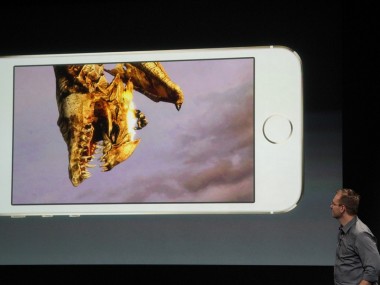
At Apple's iPhone 5c/5s event on Tuesday, Chair Entertainment co-founder and creative director Donald Mustard debuted Infinity Blade 3, the newest game in the popular iOS sword-fighting series. Naturally, he's making the rounds this week to talk about the new game and how it takes advantage of the iPhone's hardware ... but that's not stopping him from hinting at more to come.
Mustard characterized Infinity Blade 3 as a "statement" of the power of touchscreen design, saying the series "spawned a whole new genre of game." However, absent from the iPhone event this week was an update on how iOS 7 will support physical game controller peripherals, one of the features mentioned at this year's WWDC keynote.
Mustard said he's excited for that eventuality.
"I cannot wait for the day when we can make a mobile game that's supported by a more traditional controller," he said.
He said fans have asked him when Chair would make a touchscreen version of one of its pre-Infinity Blade games, Shadow Complex. The answer: never!
"Shadow Complex wouldn't be good with touchscreen controls," Mustard said, adding that Infinity Blade would not work as well on Xbox. If Chair makes a mobile game for a physical controller peripheral, he said, it "would want to design the experience from the ground up."
It would also be possible to have a mobile game that combines both forms of control, he mused.
In the meantime, though, Infinity Blade 3 at least looked good in Mustard's demo. The battle he showed off on the iPhone 5s featured an imposing and smoothly animated dragon, which was far larger than the game series' previous bosses. Although the dragon will look best on the 5s, it and other animations in the game will still look "awesome" on the iPhone 4, Mustard said, calling the latter device "still pretty damn powerful."
IB3 will cost $6.99 when it goes on sale for iOS devices on Sept. 20, timed to the launch of the 5c and 5s.
Today, Valve revealed the final piece for its plans to bring PC gaming to the living room: A game controller.
The Steam Controller is shaped like a traditional controller but features two circular, clickable trackpads instead of analog sticks. Valve said that the trackpads allow for "far higher fidelity input" and come close to the experience and precision offered by a desktop mouse. In addition, the trackpads are equipped with small electromagnets that provide haptic feedback.
Between the two trackpads is a touchscreen that can also serve as a single, clickable button. Using Valve's API, developers can build their games to use the touchscreen as a scrolling menu, a radial dial or a secondary screen. Valve also said that actions prompted by the controller's touchscreen will be overlaid onto the game, so players don't have to look back and forth between their TV and the controller.
The Steam Controller has 16 buttons total, and the location of each control is based on frequency of use, precision required and ergonomics.
Built from the ground up, the Steam Controller has been in the works at Valve for about a year. The idea behind it was to make games that were playable only with a keyboard and mouse accessible from the sofa. The Steam Controller will work with any game available on Steam.
Users can sign up to be a beta hardware tester, though Valve warns that the beta units will not have touchscreens or be wireless. The API will be made available to developers when the company ships its first prototype controllers later this year.
The Steam Controller marks the last of three announcements made by Valve this week. Earlier, the company announced its Linux-based SteamOS and Steam Machines game consoles.
All are aimed to expand PC gaming to the living room, and though Steam Machines may not be "console killers," they could disrupt the PC market.
Next week, Valve promises to reveal more details about its SteamOS prototype.
Who is going to buy the PlayStation 4 when it launches on Nov. 15? Sony's first TV ad for the next-gen gaming console, which aired tonight during "Monday Night Football," makes the safe bet that it's young dudes:
Maybe not all the young dudes can sing Lou Reed this well, but let's have some suspension of disbelief.
"Perfect Day" is couched in three mock-multiplayer games: A sword-fighting game, a car racer and a war/sci-fi shooter. The commercial doesn't say exactly which games these are supposed to be, but some rough analogues in the PS4's launch catalog for the latter two are DriveClub and Killzone Shadow Fall. Hat tip to commenter GavinLacouette for noticing Imperial City from the Elder Scrolls series in the background of the first game.
Focusing on the games in this first ad, which was produced by BBH New York, is right in line with Sony's larger marketing around the console. They're catering to the hard-core gamers (again, traditionally, young dudes) who are willing to shell out $60 for a deep and "pure" gaming experience. As before, it's distinct from Microsoft's broader strategy with the Xbox One, which got its TV debut last month in a football-centric ad that didn't mention games at all.
The PS4 will cost $399 in the U.S. at launch, versus $499 for the Xbox One, which launches a week later, on Nov. 22.
There's certainly something to be said about the assumptions, say, Civilization builds into its simulations. Look at its winstates and what they value - technological progress, military conquest, economic superiority, and cultural domination. You don't win by eliminating hunger or poverty or by nuclear deproliferation or by having a particularly high standard of living. You get it for, for lack of a better way to phrase this, very American goals.
- Chris Franklin, from a post entitled "Keep Your Politics Out of My Video Games"