Thursday, December 26, 2013

Bitcoin Value Loses Its Mind As Trading Lags On The Mt.Gox Exchange

2013-12-06_11h36_48


Bitcoin is acting up at the moment. Following a steep decline that saw the currency trade at prices not seen since late November, trading of Bitcoin on the Mt.Gox exchange has gone crackerdog.


It has fallen into a pattern of very rapid rises and falls that end and begin in a very tight, specific trading range. The following is a chart using one-minute ticks to track the price of Bitcoin on the Mt.Gox exchange for today:


2013-12-06_11h26_36


Trading on Mt.Gox is also seeing massive delays, with the current lag listed as almost 40 minutes. So, I doubt that anyone has an idea about what is going on.


Other Bitcoin exchanges, such as Btc-e are displaying similar prices for the currency, so the trading price on Mt.Gox isn't itself too batty. Instead, current trading patterns themselves are inscrutable, unless we presume some sort of algorithmic allergic reaction to current trading lag. In the meantime, if you can get your trades through, there is likely a decent arbitrage possibility at play, though trading lag times could make any such activity incredibly risky.


Coinbase has Bitcoin at $848, and Btc-e at $865. The currency was over the $1,000 mark yesterday. Bitcoin: Still not that mature.


China


While Bitcoin works through whatever bug or issue is causing its current trading pattern, we need to keep in mind the broader context of the current market position of the currency. A recent decision by the Chinese government to ban financial institutions from trading in the currency cut at its potential to become a global repository for value outside of the control of nation states.


Today, news that Baidu has ceased to accept Bitcoin is pushing the currency's value down. To lose a company like Baidu at once lowers the inherent utility of Bitcoin, and also directly contravenes the narrative that Bitcoin was starting to find wide integration into the world of e-commerce, thus granting it legitimacy, and perhaps improved stability.


Chinese demand has been a key supplier of recently robust demand for Bitcoin, comprising an increasing percentage of Bitcoin's trading volume. If that driver slips, so too could the value, and market interest in Bitcoin.


Bitcoin has fallen from over $1,200 since the Chinese news cycle broke. That's a steep decline - about 30 percent - in a few days. The question now becomes what will bring upside back to Bitcoin?


Top Image Credit: Flickr


Gift Guide: Five Kitchen Gadgets Your Foodie Will Eat Right Up

giftguide-food


More food is consumed during the holiday season than at any other time. But that's the thing with food; you can't stay full forever. And so these gadgets, services and tools should serve your food-friendly loved ones quite handily. We'll cover a range of products, including an ingredient-delivery service, a magical scale that measures the nutrition of your food, and one very special ice cube.


Everyone from a master chef to a home cook should have a blast with this gift guide, so let's waste no more time and crack some eggs.


Prep Pad from The Orange Chef ($150)


Counter Top BT scales


If you know or love a health nut, the Prep Pad is an easy, thoughtful gift. It's a Bluetooth-equipped scale that measures the weight of your food as well as its nutritional value, which is then relayed to the user through an app. Simply input the type of food you're weighing, or scan the barcode, and see a pie chart of the nutrition you'll be consuming.


With an aluminum frame and a paper composite surface, which can be hygienically wiped down, the Prep Pad can handle any mess in any kitchen, and is accurate with the weight measurement to boot. It's got a heavy little price tag attached, at $150, and it doesn't ship until February, but it is worth the wait (ha!) and the cash for a chef obsessed with health.


You can pick up the Orange Chef Prep Pad here.


Impress Coffee Brewer ($39.95)


Screenshot 2013-12-06 14.05.19


Budding caffeine addicts are just one gadget away from a full-blown addiction. Meet the Impress single-cup Coffee Brewer from Gamila.


Single-cup coffee makers are becoming more popular, but those machines cost a pretty penny and take up a lot of space in the kitchen. But what if you could combine the single cup coffee maker with French press coffee-making techniques and a thermos to transport the coffee in? That would be pretty amazing, right?


Well, that's the Impress. It's kind of a pain to clean, as you need to scoop out the grounds and such, but it manages to keep 14 ounces of coffee warm for hours.


Pick one up here.


Plated ($15/plate)


Screenshot 2013-12-06 14.15.57


Grocery shopping, to some, is the worst part of cooking. Plated takes the guess work and leg work out of grocery shopping and cooking a nice meal. After a visit to the Plated website, you can shop around between various meals, ranging from things like Garlic-Herb Pork Chops with Roasted Sweet Potato Mash, Korean-Style Short Ribs with Asian Slaw and Sushi Rice, or vegetarian classics like Autumn Root Vegetable Chili with Cornbread Croutons.


Users are given everything they need, including ingredients and directions (but not cookware), to make an excellent meal and a fun experience. For $10/month, you can buy a membership that brings the price of a meal down to $12/plate, with a minimum of four plates per week. Otherwise meals are $15/plate with a minimum of four plates in one week.


Pucs ($19 for 3)


This is a design project that first blew up on Kickstarter and is now available for purchase in a number of different packages.


Anyone who enjoys a nice glass of whiskey on the rocks or simply hates a watered down drink should enjoy these stainless steel ice cubes. They stay at the bottom of the glass and hold temperature pretty well without watering down the drink. They even come with a handsome case you can slip into the freezer.


They're also able to bring down the temperature of hot beverages more quickly, and then be removed. They're a nice conversation starter to have around the house, and come at a reasonable price. Worth considering for a boss.


Egg Minder


eggminder


The Egg Minder is a product out of Quirky and GE that brings a little intelligence to the dairy section of your fridge. Bad eggs are the worst, and the Egg Minder aims to make sure you never experience them again. The smart tray indicates which egg in the tray is the oldest via LED lights, while a wireless connection to your smartphone keeps you in the loop on expiration dates. If you're running low, you'll get a push notification. Even better, you can check how many eggs you have and when they go bad from the grocery store.


The Egg Minder costs $69.99 and is available now.


You can check out our complete Holiday Gift Guide 2013 right here.


giftguide-banner


Wednesday, December 25, 2013

Appsfire is abandoning its popular app discovery service for iOS and Android to focus on mobile ad tech

appsfire lo 520x245 Appsfire is abandoning its popular app discovery service for iOS and Android to focus on mobile ad tech


Appsfire is ditching its renowned app discovery service on iOS and Android in order to shift its business towards its new developer-focused native mobile advertizing solution.


It's not like the Appsfire apps aren't popular any more. Across iOS and Android, the company has accrued over 12 million downloads and it still sees 8,000 to 10,000 new users each day. By tailoring its suggestions based on your interests, and serving up exclusive deals and promotions only available within Appsfire, it's become an invaluable tool for many mobile app junkies.


Just last month, Appsfire launched an SDK targeting app developers, which offered smart, unobtrusive push and in-app notifications, that take advantage of users' behaviour and location in the physical world.


Appsfire's CEO Ouriel Ohayon believes that "mobile ads suck" and in many cases, we would tend to agree. Executing apps properly, both in terms of user engagement and advertizing, will only become more important for app developers in the future. By placing its full focus on the issue, Appsfire stands a better chance of breaking through as a key service for developers, and effectively monetizing its new products and services.


Initially, Appsfire is pointing to its new ad unit called SUSHI, which was also announced last month and offers a quick, full-screen ad that users can quickly engage with or dismiss without leaving the current app. Ohayon says its next product, codenamed Ura Maki (or Inside Out), is coming "very soon."


Goodbye, Appsfire apps


The iOS and Android apps for Appsfire will disappear from their respective marketplace on December 19. Existing users can continue to use the app in its current form, but it won't be available for new users.


Why ditch these incredibly popular apps? It's just a matter of focus and resources, according to Ohayon:


"We may bring them back at a later stage. Indeed, we had tons of great ideas on how to dramatically improve the app discovery experience but we're going to save that effort for now. To be frank, we're a little bit heartbroken, for our users and for ourselves; but we just can't ride two horses at the same time and our apps have slowly become secondary to us for a while now in spite of all the recent updates."


Running a third-party app discovery service isn't easy either. Earlier this year, Appsfire competitor AppGratis ran into some hot water on the App Store, reportedly breaking some of Apple's related rules. It was pulled from the App Store in April, the same fate that befell another rival, AppShopper, a year ago.


Although Appsfire hasn't run into such problems, Ohayon said they haven't exactly been supportive either:


"While their spartan decision is often warranted with players that resort to shortcuts for easy and fast success, it does not look like Apple has figured out a real way to accommodate true value adding app discovery apps; either because they consider the App Store is "the ultimate solution" (it's far from being one), or by fear of losing that dominant market maker position."


So there you have it. The Appsfire apps for iOS and Android are effectively being shuttered, and the company is doubling down on native mobile advertising.


Looking ahead: Farewell Appsfire apps, Hello Appsfire Ads [Appsfire blog]


Relaxed will automatically respond to Twitter and Facebook messages on your behalf this Christmas

Autorelaxed 520x245 Relaxed will automatically respond to Twitter and Facebook messages on your behalf this Christmas


For some people, social media is baked into their lives - not a minute or a meal can pass without it being shared with the world. Those people won't want to use Relaxed, a tool that will respond to Facebook mentions and Tweets directed at you on your behalf.


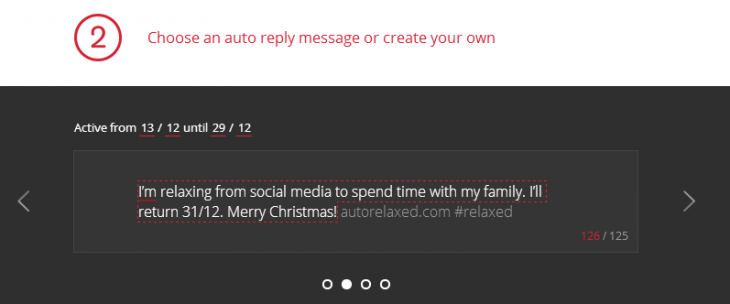
There's not the most advanced set of responses to choose from (although you can of course set your own) and it will always include the autorelaxed.com URL at the end, but if you're the kind of person that likes to take a step back from social media over the holidays, it's a simple tool for setting something akin to an out of office email responder.


autorelaxed message 730x304 Relaxed will automatically respond to Twitter and Facebook messages on your behalf this Christmas


To use it, you just connect your chosen account(s) to the service, set a message and a date the auto-responder should start and stop. Once that's done, you're all set. It should be noted that while it will happily send your response to private (as well as public) messages on Facebook, it can't respond to Direct Messages on Twitter.


Whether or not it somewhat defeats the purpose of social media, by removing the social aspect, is up to you to decide.


Relaxed


Tuesday, December 24, 2013

Egypt: Two dead as rival rallies clash - live updates


Egypt is braced for more violence as the military urges its supporters onto the streets, while supporters of the ousted president Mohamed Morsi also plan to rally


Haroon SiddiqueBen Quinn


Spain train crash: wait to question driver


More details emerge of Francisco Garz n, 52, as he recovers in hospital after train crash that left at least 78 dead


The focus of the investigation into Spain's worst rail accident for 40 years remains on the train's driver, Francisco Garz n, who has been under arrest in hospital since Thursday evening.


Garz n has so far refused to answer police questions, the Press Association reported. He was now expected to questioned by a judge, it said.


At least 78 people died in the accident in which the high-speed Alvia 151 train careered into a sharp curve at more than twice the permitted speed before hurtling off the tracks. By Friday night, 31 were critically ill in hospital, some of them in comas.


Antonio del Amo, head of the Spanish national police's central forensic unit, said six of the bodies recovered from the wreckage had yet to be identified.


On Friday, more reports of Garz n's actions leading up to the crash began to emerge. The daily El Pa s reported that the experienced 52-year-old driver had received an order to reduce speed just seconds before the crash and had acknowledged it by pressing a button in the driver's cab. It remained unclear whether he had been unable or unwilling to apply the brakes on the train, which was running five minutes behind schedule.


A stream of leaked extracts from recorded conversations immediately following the disaster suggested that Garz n held himself responsible for what had happened.


While still trapped in the cockpit of his train, he was reported to have told the emergency service of the state-owned train operator, Renfe: "I hope there are no dead, because they will be on my conscience." He added: "I should have been going at 80 [kph] and I am going at 190." Garzon also reportedly said over and again: "We're human, we're human."


The Spanish news agency Europa Press reported that during the same conversation the driver had said: "I've fucked it. I want to die."


Contacted by telephone in hospital by the regional newspaper, La Voz de Galicia, Garz n refused to comment beyond saying, "You imagine how I am."


Details also began to emerge of Garz n's life. He is a lifelong railwayman and native of Galicia, living in the city of A Coru a with his widowed mother, who lost her other son in a car accident. But he was born in Monforte, an important regional rail centre, and has a flat there.


The son of a railway worker, Garz n was brought up in housing built for railway workers and went to a school run by Renfe. It was in Monforte, 70 miles inland from Santiago de Compostela, that he began working for the company in his early 20s.


He had 10 years' experience as a driver and Renfe's president, Julio G mez-Pomar Rodr guez, said Garz n had worked on the Ourense to Santiago line, where the accident took place, for more than a year.


Before returning to his native Galicia, he had worked on the line between Madrid and Barcelona, which is served by so-called AVE trains that can reach speeds of 310kph (193mph).


Julia Morais, a friend of his own age in his home town of Monforte de Lemos, told Reuters: "He was sensible and very good at his job. We don't know what could have happened."


Garz n's professionalism appeared to have been compromised by the discovery of a photograph he posted to his Facebook page showing his speedometer at 200kph. However, as a driver of high-speed trains he may have been on a stretch of the network where such a speed is permitted. The photograph was posted on 8 March 2012. It nevertheless surprised Garzon's friends. One wrote: "You're going like the bloody clappers, lad. Brake."


Garz n is suspected of criminal recklessness, but has not yet been charged. Spanish rail experts have argued that mere negligence cannot explain the crash: that the "black boxes" recovered from the train will show that a technical fault was partly - or perhaps entirely - to blame for what happened. Garz n reportedly tested negative for alcohol following the crash.


Garz n was led from the scene of the tragedy with his face covered in blood and given nine stitches to a head wound, but appeared otherwise uninjured.


Meanwhile, in the pilgrimage city of Santiago de Compostela, a shrine to the victims of the rail disaster was forming spontaneously at the entrance to the great cathedral of St James on Friday evening.


Friday was the feast of St James and the day many of the pilgrims to the traditional site of his tomb in the cathedral aim to complete their journeys. Some tied little bunches of flowers to the railings at the entrance. Others placed candles and notes on the ledges below. Nearby, a stack of pilgrims' staffs leant against the wall.


A day for the ending of journeys was appropriate for remembering those who on Wednesday failed to complete theirs. In many cases it was sheer chance that some of the passengers aboard the Alvia 151 lived and others died.


Carmen Quiroga from A Coru a had switched to a later train because she stood a better chance of dining aboard in peace. As soon as her son heard of the accident, he rang her mobile, but it was out of range. "When I eventually spoke to him, he began to weep: he thought I was there," she told La Voz de Galicia.


Benito Est vez changed his plans after learning from his parents that a relative had been taken to hospital, seriously ill. "I feared that I'd never see him again," he said.


Others were as unlucky as Quiroga and Estevez were fortunate. A young man at the scene of the accident who declined to be named said he had swapped seats on the way up from Madrid with a woman who was killed when the train derailed.


Father Ricardo V zquez, the spiritual director of the seminary in Santiago, was among those on hand to provide comfort at the centre where relatives of the victims learned of their loved ones' fate. Among the "devastated human beings" he attended was a man who "was crying out that he wanted to die because he felt responsible for the death of his daughter whom he had persuaded to come and visit him".


Manuel Su rez, a sales representative from near Santiago, often travelled to Madrid for his work, but never by rail. "He always went by car or plane," said a cousin. "But on this occasion, he said: 'This time, I'll go by train.'"


Monday, December 23, 2013

Bradley Manning's 'sole purpose was to make a difference', lawyer insists


In closing arguments, defence lawyer paints portrait of Wikileaks source as someone without 'evil intent'


The lawyer representing the WikiLeaks source Bradley Manning has asked the judge presiding over the soldier's court martial to decide between two stark portrayals of the accused - the prosecution's depiction of him as a traitor and seeker of notoriety, and the defence's account that he was motivated by a desire to make a difference in the world and save lives.


Over four hours of intense closing arguments at Fort Meade in Maryland, David Coombs set up a moral and legal clash of characterisations, between the Manning that he laid out for the court, and the callous and fame-obsessed Manning sketched on Thursday by the US government. "What is the truth?" the lawyer asked Colonel Denise Lind, the presiding judge who must now decide between the two accounts to reach her verdict.


"Is Manning somebody who is a traitor with no loyalty to this country or the flag, who wanted to download as much information as possible for his employer WikiLeaks? Or is he a young, naive, well-intentioned soldier who has his humanist belief central to his decisions and whose sole purpose was to make a difference."


Coombs answered his own rhetorical question by arguing that all the evidence presented to the trial over the past seven weeks pointed in one direction. "All the forensics prove that he had a good motive: to spark reforms, to spark change, to make a difference. He did not have a general evil intent."


Coombs ridiculed the prosecution case as a "diatribe" and said that its account of his client as someone who only cared about himself as the opposite of the truth. "He is concerned about everybody, he is concerned to save lives."


The lawyer continued: "He felt were were all connected to everybody, we had a duty to our fellow human beings. It may have been a little naive, but that is not anti-American, it is really what America is about."


The closing arguments presented over two days in the courtroom at Fort Meade have emerged into a clash of visions about the nature of leaking of official secrets in the digital age. At the centre of the battle is Manning himself, a diminutive figure in military fatigues, who has sat silently throughout.


With the end of the evidential stage of the trial, it now falls to the Lind to make sense of these two starkly conflicting pictures and reach a verdict that could come within days. Sitting without a jury at Manning's own request she must now decide whether the soldier is guilty of 21 counts that could see him detained in military custody for life without any chance of parole, plus a total of 154 years for itemised offences.


The soldier has already admitted to transmitting hundreds of thousands of documents to WikiLeaks, and to a lesser version of the charges that carry a maximum sentence of 20 years in jail.


The most serious charge against Manning, carrying a possible life sentence, is that he "aided the enemy", specifically al-Qaida, by passing intelligence to WikiLeaks which then made it accessible on the internet. In prosecution closing arguments, the government alleged that because of Manning sensitive US state secrets had been found in the possession of Osama bin Laden the day the al-Qaida leader was killed.


Countering that view, Coombs argued that WikiLeaks was a legitimate news organisation on a par with the international alliance of news outlets that had worked with the anti-secrecy websites to release edited versions of Manning's disclosures. "WikiLeaks is no different from the New York Times, no different from the Guardian, no different from Der Spiegel."


He cited the US government's own counter-intelligence report on WikiLeaks that described the organisation as being motivated by a desire to hold governments accountable to their people. "That is the watchdog function of the press - that is what the press is designed to do," Coombs said.


The "aiding the enemy" charge is the most contentious aspect of the Manning trial. It has provoked a wide debate about its possible impact on press freedom in the US, with first amendment advocates warning it could spread a chill across investigative reporting.


Coombs made his comments within that context, implying that to hold Manning guilty of helping al-Qaida by dint of having leaked to a news organisation would set a dangerous precedent. "Giving something to a legitimate news organisation is the way we hold our government accountable. Giving information to the world, to inform the public does not give intelligence to the enemy," he said.


Contrary to the prosecution's claim that he was indiscriminate in his leaking, Coombs said that Manning was careful to be selective in his choice of documents, weeding out "humint" reports that gave specific details on human sources on the ground and focusing instead on civilian loss of life such as the Apache video. "If he was a traitor who wanted to hurt the US, you would have seen a lot more indiscreet disclosures," he said.


The defence attorney also tried to undercut prosecution allegations that the more than 700,000 documents Manning leaked were damaging to the US. The soldier faces several counts under the 1917 Espionage Act accusing him of leaking intelligence "with reason to believe such information could be used to the injury of the United States or the advantage of any foreign nation".


Coombs attempted to counter those charges by arguing that in fact the WikiLeaks disclosures had very limited impact on US interests. The more than 750 files on Guantanamo detainees were "not worth the paper they were written on", the lawyer said, adding they were intended for background information and were riddled with inaccuracies.


The war logs from Afghanistan and Iraq were historical documents that recorded past battlefield events that could not provide useful intelligence to the enemy given how rapidly tactics on both sides changed in a military conflict. "The harm that could have been done is like Chicken Little yelling the sky is falling down," Coombs said.


In the most emotive scenes of his closing arguments, Coombs played to the court three clips from the video Manning uploaded to WikiLeaks of a 2007 Apache helicopter attack in Baghdad. The clips showed a group of civilians, that included two Reuters correspondents, being mowed down from aerial bullet fire.


Coombs asked the judge to watch the video "from the standpoint of a young man looking at eight people and what we know now to be the truth - there are two reporters there - standing on a street corner and being shot like fish in a barrel ... You have to view that through the eyes of a young man who cared about human life."