Monday, March 23, 2015

Sunday, March 22, 2015
Tuesday, March 17, 2015
Monday, February 9, 2015
Sunday, January 4, 2015
Sunday, November 23, 2014
Oracle Taps Adrian Jones to Head Asian Operations (Read the Memo)

Software giant Oracle named Adrian Jones to head its operations in Asia. The move was announced in an internal email from Oracle president Mark Hurd, obtained by AllThingsD.
If the name sounds familiar, it may be because Jones (pictured) is a former Hewlett-Packard exec who was sued by that company in 2011. HP had alleged that Jones stole trade secrets and shared them with Oracle. The suit dates back to one of the more rancorous periods in the relationship between those companies, and the aftermath of the days when Hurd, who was for five years the CEO of HP, joined Oracle following his surprise resignation in 2010. (That situation, you'll recall, spurred its own legal merry-go-round.)
In a lawsuit filed in the California Superior Court in Santa Clara County, HP had accused Jones of copying sensitive files concerning its strategic and financial plans, plus other information, to a USB drive, and not returning them when he resigned from the company. Among other things, lawyers for HP had sought to examine every electronic device Jones owned, including phones and iPads belonging to his girlfriend.
It later turned out that the copying of the files in question didn't take place at the time that HP originally said it did, but during a period when the computer Jones used was in the hands of HP's corporate security office. Talk about awkward.
Since then, the case has been forgotten. HP was eventually forced to withdraw the case against Jones entirely, according to people familiar with how it all turned out. Neither HP nor Oracle would confirm that, however. Entries in the case-record file on the court's website make vague mentions of a dismissal that occurred on July 30, 2012.
The case against Jones was one of many HP filed during a period when Michael Holston was its general counsel. Remembered as a key aide to Hurd during the years he was running HP, Holston remained HP's general counsel during the 11-month tenure of former CEO L o Apotheker, but was among the first members of HP's executive council to leave the company after Meg Whitman became CEO.
Anyway, enough with the legal footnotes. Here's the memo announcing Jones' promotion:
From: Mark Hurd
Date: July 24, 2013, 2:00:02 AM PDT
To: Oracle Asia Pacific SalesThe business across Asia Pacific represents a significant opportunity for Oracle. We continue to invest in this region and it is poised for growth.
I am pleased to announce Adrian Jones to the position of General Manager and Senior Vice President, Oracle Asia Pacific. Adrian will lead the region for hardware and software, and be responsible for accelerating market share, revenue, and margin growth.
Adrian has strengthened our Systems business and has held senior leadership positions across the IT industry for more than 20 years. Before joining Oracle, he held the position of Senior Vice President of Enterprise Servers, Storage and Networking for HP Asia Pacific and Japan. He has in-depth knowledge of these markets.
I would also like to take the opportunity to thank Steve Au Yeung for his contributions to Oracle. Steve is leaving Oracle, and we thank him for his five years of leadership and wish him the best in the future.
Mark
Wednesday, October 22, 2014
Tuesday, August 5, 2014
Wednesday, July 2, 2014
Friday, June 13, 2014
Friday, May 9, 2014
In the aftermath of a typhoon, Viber lets Philippine users call regular overseas numbers for free

A powerful typhoon swept through the Philippines over the weekend, leaving a trail of destruction with officials fearing that up to 10,000 people may have died.
In light of the situation, with people struggling to contact their families and vice versa, Viber has opened a temporary service to let Philippine users call regular (non Viber) numbers outside of the Philippines for free. The service is available right now. To call someone, all you have to do is go to any contact and tap any of the numbers listed next to "Viber Out."
Typically, if you call a non-Viber user, it will go through your carrier like a normal overseas call which will be charged accordingly.
All numbers (both landline and mobile) are supported in a handful of countries, while landline-only numbers are supported in a wider range of regions - as listed on Viber's site.
Typhoon Haiyan Relief - Free Calls Also to Non-Viber Numbers [Viber]
Headline image via Ryan Lim/Malacanang Photo Bureau/Getty Images
Oppo’s N1 Android smartphone, with a 13MP rotating camera, officially goes on sale in China
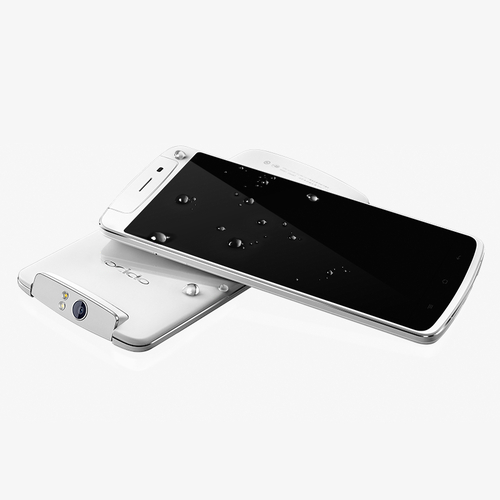
Handset maker Oppo unveiled the N1 in September, a 5.9-inch Android smartphone with a full HD display and a 13-megapixel camera fitted to an adjustable hinge.
Today, the phone has finally gone on sale in China for CNY3498 ($574) on Oppo's website. Only 10,000 units are available though, on a first-come-first-served basis.
Oppo claims that the N1 camera, constructed from 67 different components, is the first to feature a six-piece lens design in an Android smartphone. It remains to be seen when the phone will roll out to other international markets, but in any case, it's got tough competition from the likes of the iPhone 5s, Lumia 1020 and Xperia Z1.
Oppo Store (China)
Image via Oppo
Thursday, April 24, 2014
Expanding your startup into Asia? Here’s how to build out your operations in the region

Thomas Clayton has started and run numerous high-tech startups in Silicon Valley. He is currently CEO of Bubbly, a social media startup backed by Sequoia Capital, SingTel Innov8, and JAFCO. The company is one of the largest VC-backed startups in Southeast Asia, having raised over $60 million in funding.
This is the second part of a four-part series that will provide insight into starting, building, and funding a company across Asia. See part one here.
My first post in this series described how businesses should start when considering expansion into Asia, which is home to some of the largest and fastest growing markets in the world.
The inspiration for my second post came from the many CEOs and entrepreneurs who come to me knowing they want to go after Asia and are aware of their target markets, but unsure of the best approach to start building out their operations on the ground.
For example, should they hire in-market consultants, an expatriate based in a hub city, or partner with a local player? To best answer these questions I have highlighted six key pieces of advice for execs who are growing the operations side of their business in an Asian country or the region itself.
Hire the right people - local and entrepreneurial
A company cannot hire out of a hub city like Singapore and expect those individuals to cover Indonesia, India, Thailand, and the Philippines. A business cannot even realistically cover a subset of those countries from Singapore. Having people in-market and on the ground is key in each of these countries. Nothing gets done otherwise. Someone needs to be pushing things forward in-country day-in and day-out.

You also need true local expertise. It's worth the investment to have one local person in each market rather than one person centrally trying to cover all of the markets. Moreover, given the salary differences across markets, one person in three of these countries can often cost about the same as one in Singapore or Hong Kong.
Another learning I've come across the hard way is to stay away from 'sales consultants.'
I would say that 95 percent of consultants are not working full time for a company for a reason. I've seen so many Western tech companies burn cash on these guys with zero results. They're often expats that move to Asia for the lifestyle or that were on holiday and decided to stay longer-term, and convince Western companies or regional firms to hire them on a monthly retainer to build out their operations.
The fact is that they simply don't have the exhaustive relationships to really move things forward. The only reason they keep getting business is because their Western clients can relate to these guys culturally and communicate with them effectively, thus making their clients feel more comfortable. However, this is more of a luxury than a necessity.
The other typical 'sales consultants' are local players that claim some "very close" relationship with a key player at a target firm. These people simply cannot be trusted as far as you can throw them.
The best-case scenario for hiring any of these consultants is they don't take your business anywhere and just waste your time and money. The worst-case scenario is that they will steal your intellectual property and cut you out of the loop (this is especially true in countries like Indonesia, Vietnam, China, and Thailand) - I'm serious, watch out!
Important qualities to look for in those initial candidates on the ground are guys that are scrappy and very hands-on. In Asia, there are too many candidates with a few years of work experience that just want to "manage" and not actually do anything themselves. It gets worse with even more experienced candidates. Many of the most seasoned guys are used to having teams of people around them that do everything for them.
Making it worse still, recruiters in the region tend to only focus on the biggest branded companies for their candidates. That's just lazy. Moreover, coming from Google or Cisco is an EXTREMELY different skill set and environment than the entrepreneurial, scrappy style that is required to build out a successful remote operation on the other side of the world.
One should simply focus on a track record of entrepreneurship and the ability to be a jack-of-all trades rather than experience with big brands. Recruiters don't understand this, so try to be hands on with your own network and utilize services like LinkedIn when finding your first few key employees.
Be 'local' but don't overdo it
Partnering with large local companies often results in the larger company wanting to "localize" your service. Most of them either take their localization efforts too far or focus on many of the wrong aspects.

For example, I've seen local mobile operators white-label mobile applications with a ridiculous brand and put them into the local language - which is not always necessary and can often have a degrading effect on your service, since many Asian consumers envy Silicon Valley brands and do not view operators as sexy brands.
Then these large companies, which are often the dominant players in their respective markets, will demand dozens of new customizations with a list that will grow until it seems endless.
Most of these will fall under the auspices of "localization," but the reality is the partner is just trying to play 'product manager' and thinks they know more than you do. After all, they're used to treating partners this way in their own markets. When they say, "jump" everyone always does.
This is obviously not sustainable. In short: be the master of your own localization strategy.
Start light and scale from there
In many northern Asia countries, especially Japan, large local players will want to set up joint ventures or new entities with lots of overhead. My recommendation is to shy away from this.
Joint ventures are a thing for large corporations. Keep it simple.
Also, there is no need to open a legal corporate entity until the company has sizable revenue and employees on the ground. Many entrepreneurs think this is the first thing they need to do when entering a new country. Lawyers will always tell you it's only a few thousand dollars, but they're not factoring in all of the overhead and ongoing accounting compliance that will come along with it.
In most cases, its an additional $50,000-$100,000 per year in overhead for the admin costs alone.
My advice? Wait as long as possible.
There is a large gray area in each country, but generally companies can wait until they have a few employees and over $1 million in revenue before they need to take that step.
Never assume rules are different and things must be done unethically
So many entrepreneurs ask me about the graft in countries like China, Indonesia, and Thailand. Yes, it's there, but it is way overblown and it's not necessary to get involved in order to build out a successful business here.
Moreover, graft has decreased significantly over the past decade and large players are usually above the table. I've been able to build out businesses in all of these countries leveraging hundreds of local partners without ever going down this path or even crossing into a gray area.
My advice is to draw a firm line and stay clean, which should not be difficult because as a foreigner, it is unlikely that you will ever even be approached to cross this line. If one of your local employees says it's necessary, they're trying to take the easy way out and you have the wrong people on your team.
Don't underestimate the power of celebrities in these markets

Asians have a huge affinity towards celebrities and what they are using, because they want to use it too. Word of mouth is incredibly powerful in Asia, and celebrities command huge, devout fan bases that not only follow a celebrity, but will also take action based on recommendations from a trusted figure like a movie star or cricket player.
It's the sole reason companies like Blackberry got a second life in Asia, and it led to the initial takeoff of GREE and Line in Japan. Local players realize this and leverage celebrities heavily. Working with local talent agencies is a great way to get your foot in the door and start getting some stars to help get the word out.
Mobile operators still matter in the ecosystem
If you're doing anything related to mobile, it's imperative you understand that feature phone penetration is still well over 80 percent in most Asian markets, which amounts to over four billion consumers. Therefore, working with operators is still one of the quickest ways to reach the masses.
One key benefit that operators offer is easy and seamless billing, which can provide a significant boost since many areas across Asia lack electronic payments and have meaningless credit card penetration. However, prepaid SIM cards are ubiquitous and nearly every consumer has one. Digital ad revenues are still too small in most Asian markets to be a viable business model, so charging consumers via operator billing is still one of the most pervasive local models.
The above are just a handful of lessons that I've found to be invaluable for my businesses and those that I advise or sit on the Board of. I hope that it gives others a little color as they look to expand into Asia and a cleaner entrance into this exploding market.
Headline image via Thinkstock, other images via Thinkstock, Thinkstock and AFP/Getty Images
Sunday, February 16, 2014
Following a recent fatality, Apple publishes Chinese web page encouraging use of official chargers

Following two back-to-back accidents in China believed to be iPhone-related, Apple has added a page to its China website dedicated exclusively to informing consumers about its chargers.
A message at the top of the page states that Apple has always placed the safety of its consumers as a foremost concern, and that all of its products, including the iPhone and iPad, must go through rigorous testing for safety and reliability.
The passage then reads (translated from the Chinese):
When you charge your iPhone or iPad, we suggest that you use all USB power adapters with correspondingly-labeled USB cables. These adapters and cables can be purchased as individual items from Apple and authorized Apple retailers.
Below the message, the page features detailed pictures of the power adapters for some of Apple's latest devices, with specifications for the each adapter's corresponding power cord and red arrows pointing to the official Apple guarantee labels on each device.

The appearance of the page, which is unique to Apple's China site, is almost certainly in response to two life-threatening incidents in China purportedly involving counterfeit Apple device chargers. Earlier this month Ma Ailun, a 23 year old woman from Xinjiang, died tragically from electric shock when she allegedly used her iPhone 5 while connected to an unauthorized charger. Just days after that, a man from Beijing fell into a coma after allegedly inserting a third-party charger into his iPhone 4. Both incidents made international headlines.
Following Ma's death, Apple issued a statement expressing condolences to the Ma family, and pledged to investigate the matter and cooperate with authorities.
By publishing the webpage, Apple is making a concerted effort to show support for its customers in a year in which it received several towel-whippings from the Chinese media. The company came under scrutiny in April, when the People's Daily (China's foremost party-mouthpiece newspaper) issued reports accusing the company of shirking on its warranty policy in China. The incident prompted Apple CEO Tim Cook to issue a formal apology.
In its latest earnings report Apple revealed that its revenues in China dropped 14 percent year-on-year, but this statistic is best understood as a temporary lull. The company remains bullish towards the Middle Kingdom, with Tim Cook stating earlier this year that China is Apple's most important market, and that the company intends to double the number of Apple stores in the country within two years.
Top image credit: Feng Li/Getty Images
Friday, February 14, 2014
China’s censorship on Sina Weibo in overdrive after former official Bo Xilai is charged with bribery

China's censorship is in overdrive after a former high-ranking official Bo Xilai was charged today with bribery, embezzlement and power abuse, the Wall Street Journal reports.
Censors have reportedly been taking down unfavorable comments on China's Twitter-like microblogging platform, Sina Weibo, that criticize the Communist Party or express sympathy for Bo. Many of the deleted posts are shown on the Free Weibo site. The WSJ report also mentions that a note of support from a microblogger in Dalian, the city where Bo started his political career, was later deleted.
It is possible too that some of the posts may have been deleted by Sina Weibo's "rumor control" team - which aims to dispel false news and information, though in some cases, its hand appears to be forced by the government.
Bo, a former Communist Party politician, captured the attention of Chinese citizens and people from all over the world as details of his allegedly corrupt life surfaced last year - which included links to the mysterious death of a 41-year-old British businessman in a Chongqing hotel room that was declared a murder.
His downfall caused a huge political shockwave that reverberated to the online world, and most comments went through Sina Weibo, with the WSJ noting that back then plenty of posts debated on whether Bo was a criminal or a sacrificial lamb.
Last year, this led to three of China's most influential Internet companies - Baidu, Sina and Tencent - pledging to "firmly support and cooperate with relevant government departments in cracking down and probing web rumors."
Subsequently, this time round the comments on Sina Weibo in response to Bo's news are largely supportive of the government. Several comments say that the Communist Party has made the right decision to charge Bo, and that Bo's indictment proves the government's determination to stamp out corruption and that they believe in the Party.
The one-dimensional tone of these comments leaves one to believe that China's censors have been hard at work. The WSJ report notes that this could be the work of so-called trolls or the "Water Army" - real people who use so-called zombie accounts to post comments online to influence public opinion.
Among other social media services, Twitter is blocked in China. On the other hand, Sina Weibo has more than 400 million registered users and the service enjoys a large profile in China, becoming a force to be reckoned with. This has resulted in Sina Weibo having to walk a fine line between exerting control on the service and letting it operate organically as a forum for dissent and "free"(er) speech. This time round, it seems the government has the upper hand.
Headline image via Mobile Monday Bangkok
Saturday, February 8, 2014
Indian operator Reliance puts messaging app Nimbuzz and Facebook hard keys on $42 phone

Nimbuzz is responding to increasing smartphone adoption in India after it jointly unveiled the first phone that sports a quick-access hard key to its mobile messaging service.
The phone is manufactured by Chinese firm Haier, but will be branded and sold by operator Reliance from Friday. The Reliance CG300, as it is called, is targeted at the mass market and will retail for just INR 2,499 ($42). That's down to the fact it is powered by the J2ME platform rather than a more expensive platform like Android, though we understand that the price could drop below $40 in the future.
The BlackBerry-looking phone is fairly unremarkable. It includes a QWERTY keyboard, dual-SIM option and dedicated buttons that load Nimbuzz, which has 25 million of its 150 million registered users in India, and Facebook when pressed.
However, at a price point that nearly anyone can afford, Nimbuzz CEO Vikas Saxena is optimistic that the phone can rival entry-level Android devices (which are priced upwards of $100) to appeal to feature phone owners keen to upgrade, as well as smartphones owners intrigued by a dedicated messaging phone.
While Facebook is also present on the phone, Saxena says that social networks offer "a different experience" to dedicated messages services like Nimbuzz, and he doesn't anticipate being overshadowed.
The hard key is not a new feature - HTC put a Facebook button on two devices back in 2011 with little success, while Nokia's $72 Asha 210 has a WhatsApp button - but Saxena believes it will become a more common sight as messaging apps continue to replace the SMS experience for many.
Indeed, he says Nimbuzz is working on other devices with hard keys, although he declines to provide further detail. The aim is to provide a more engaging experience for existing users and battle rivals to drive new user signups.
India's mobile messaging space is heating up with competitors. Japan-headquartered Line launched a local campaign this month, joining China's WeChat and local services like BSB-backed Hike and Nimbuzz. WhatsApp, which has 250 million monthly active users worldwide, leads the pack in India.
The CG300 is the latest move that Nimbuzz has made to strengthen its relationship with carriers. In recent months the company has inked terms with Mobilink in Pakistan, Hutch in Sri Lanka and Aircel in India; Saxena says the company has partnered with eight telecom firms in India in total.
Saxena believes the device has the potential to sell "millions" of units, but it will remain an India only initiative.
"Like carriers embracing messaging apps, we're experimenting with ideas to see what kind of retention and engagement ratio we can drive," he explains. "The idea is to remove any friction and make the service easy to access."
The device is Reliance branded and, though the operator is preparing a dedicated data plan to accompany it, it will work on any mobile network across the country.

Images via Nimbuzz
Tuesday, January 21, 2014
Japan’s Docomo prepares upgrade to bring 150Mpbs downlink speeds to its Xi LTE network

NTT Docomo, the largest mobile network operators in Japan, announced today that it will be starting prelaunch operations for an upgrade to its Xi LTE network, offering downlink speeds of up to 150 Mbps - similar to speeds being offered by South Korean operators SK Telecom and LG Uplus for their LTE-Advanced services.
Docomo will start verifying its 150 Mbps LTE service in Japan's Kawasaki, Kanagawa Prefecture from July 30 onward, prior to the planned launch of the service in parts of Tokyo, Osaka and Nagoya this October.
Docomo says it has been upgrading its LTE coverage and data transmission speeds consistently, most recently expanding its 112.5 Mbps downlink service to more than 130 cities as of this month. Its latest move has not been termed as LTE-A by the operator, so this is probably an appetizer to the final LTE-A rollout (which is expected to arrive in 2015). In February, Docomo selected Nokia Siemens and Panasonic to upgrade its network with certain LTE-A features like carrier aggregation.
The 150 Mbps service boasts double the speeds of the first LTE network that Docomo rolled out in 2010, though the operator notes it is a theoretical maximum as speeds may vary depending on network traffic or transmission environments.
With its latest move, Docomo has become the first operator outside of South Korea to roll out such high download speeds. Docomo notes that its 150 Mbps LTE network will be compatible with selected handsets introduced from October onward.
Last month, SK Telecom took the wraps off the world's first LTE-A network offering speeds of up to 150 Mbps, which is now operational in Seoul and a further 42 cities across the Gyeonggi-do and Chungcheong-do districts. Subsequently, LG Uplus introduced a rival service earlier this month, which is currently available in Seoul and a few other major cities, but will be made available across South Korea during the third quarter of this year.
Consumers have been quick on the uptake as they display their eagerness for higher speeds - more than 150,000 subscribers signed up for SK Telecom's LTE-A service just 14 days after its launch, making for a take-up rate of more than 10,000 new subscribers a day.
So far, only Samsung's Galaxy S4 LTE-A handset - which launched on the same day as SK Telecom's LTE-A network - runs on the service, though LG and Pantech are reportedly planning to release LTE-A smartphones soon.
US carriers have also been keen to push ahead with their LTE-A plans, with T-Mobile reportedly saying it will roll out LTE-A features later this year and Verizon talking about next-generation speeds.
Image Credit: Yoshikazu Tsuno via AFP/Getty Images
Top smartphone dog Samsung’s explosive growth period is over

Despite posting record net profit for the second quarter of 2013 that was up 50 percent year-on-year, Samsung spent its earnings call assuring investors that the company is poised for further growth with its "competitive" line-up of products.
The reason for its defensive stance? There have been lingering concerns that the Korean company simply cannot maintain its explosive pace of growth any longer. In fact, Samsung warned that growth in its mobile business will slow in the third quarter due to the onset of more competition as more products are being rolled out.
Record profit not enough
Samsung announced its 2Q 2013 earnings today with KRW57.46 trillion ($51.7 billion) in revenue, in line with its earlier estimate of KRW57 trillion. Operating profit stood at KRW9.53 trillion ($8.6 billion), also in line with the guidance of KRW9.5 trillion, while net profit was seen at a record-high figure of KRW7.7 trillion ($6.9 billion).
Samsung has experienced phenomenal growth to date over the past year - its revenue increased by 21.9 percent from 2011 to 2012, while its operating profit jumped 85.9 percent and its net profit surged 72.5 percent. This was largely attributed to the roaring success of the Galaxy S3 phone - which hit 40 million channel sales in just seven months. Back in January, the company announced that Galaxy S shipments had topped 100 million, with the Galaxy S3 alone contributing 41 million units.
According to a Guardian report in 2011 citing IDC figures, Samsung shipped just 7.3 million phones in Q3 2010. Fast forward to Q2 2013, and IDC estimates that Samsung - which hasn't provided figures publicly since Q3 2011 - shipped 72.4 million smartphones during the quarter.

The Galaxy S4 and marketing expenses
This piled on expectations for the Galaxy S4 phone, which has not disappointed - it became Samsung's fastest shipping device ever when it topped 10 million "channel sales" (aka shipments to retailers) within a month of its launch, and reports from Korean media claim the device has already tipped the 20 million shipment mark.

However, how much goes into pushing these products? A lot, it seems. Samsung acknowledged in its earnings call that the increased expenditure related to promoting its products and tie-ups with distribution channels has taken a toll on the company's financials, though it did not disclose any figures.
In 2012, Samsung spent $401 million advertising its phones in the U.S. compared with Apple's $333 million, according to ad research and consulting firm Kantar Media, the Wall Street Journal reported in March this year.
The Korean firm is known for aggressive marketing and advertisements whenever it rolls out a new phone. For the launch of its flagship Galaxy S4 phone, Samsung held an over-the-top press event at New York's Times Square featuring a live orchestra and a long series of skits.
Worries over market share
Many analyst firms have pegged Samsung as consistently having the greatest market share in smartphones. Strategy Analytics noted that Samsung was the world's number one smartphone seller for the first quarter of this year in terms of revenue, while IDC has just pinned Samsung's market share at 30.4 percent for the second quarter of this year according to shipments. However, in its latest report IDC noted that Samsung's share of the market has receded slightly, going from 32.2 percent last year to 30.4 percent in Q2 2013.
During its earnings call, Samsung executives acknowledged that they see intensifying competition among vendors, resulting in "a certain amount of uncertainty."
An ABI research report released today noted that feature phone shipments declined 20% year-on-year in the second quarter to 195 million units, as low-cost manufacturers continued to penetrate the up-market with increased device specifications. Senior Practice Director Jeff Orr says:
The second half of 2013 will be defined by fierce competition between price-aggressive OEMs moving toward the middle tiers for increased margins while at the same time top tier OEMs are diversifying portfolios into the middle in search of continued growth.
It is not only Apple that Samsung is facing off against - that analysis would be much too narrow-minded. Indeed, IDC noted that LG's record haul of 12.1 million smartphone shipments represented a 130 percent year-on-year improvement, while Chinese firm Lenovo charted 130.6 percent year-on-year shipment growth.
Samsung said it would be likely rolling out more mid-to-low-end smartphones during the second half of this year, which may be targeted at keeping its hold on emerging markets. In the first quarter of 2013, Samsung sold a record 12.5 million smartphones in China alone.
Samsung has already been taking steps to cover as many aspects of the smartphone market as possible. Its Galaxy S4 has been rolled out in various versions - the Mini, the Active, the Zoom and the LTE-A.

Concerns over stock price
Samsung executives also addressed the worrying issue of the company's stock price, which has underperformed the market recently. The Wall Street Journal has reported that brokerages have been downgrading the company's stock and revising downward their shipping and earnings forecasts, with Samsung's market value since mid-March declining by nearly $30 billion.
They argued that the current situation is a reflection of global macroeconomic issues that have affected the Korean stock market rather than company issues and that industry experts believe its stock is undervalued, but that the management will closely monitor the stock movement and strengthen its competitive advantage to improve the stock performance.
Future growth opportunities
With the smartphone market approaching saturation, Samsung executives identified the tablet and business-to-business (B2B) market as future growth opportunities. Samsung's tablets have been posting solid mid-10 percent range growth, with 30 percent quarter-on-quarter growth expected for tablet shipments in 3Q 2013, according to the company. IDC noted that Samsung grew its share in the tablet market to 17.9 percent in the first quarter of this year, taking second place after Apple.
Samsung has also been on a drive to garner more market share in the B2B space, launching a global marketing campaign for business users and getting security approval for the Galaxy S4 from the US Department of Defense (DoD), clearing the way for the device to be used as part of a new policy for US government staff.
Samsung says it has one further flagship device to launch this year, and that's almost certain to be the Galaxy Note. New versions of the tablet-cum-smartphone device has typically been launched at the IFA trade show in Berlin in previous years, and it is expected that the latest version will be unveiled at IFA 2013 which takes place next month.
The firm says that with this planned launch, it expects to see demand for its products increase and growth to sustain in the third quarter. Will Samsung's growth ever be as rapid as the past year though? That could be hard to achieve given the amount of competition in the smartphone sector - what with Apple rumored to roll out a lower-priced iPhone and other players coming up with more products.
Samsung may just have to settle for slower growth - which is actually a natural progression after its spike over the past year, but this means investors will have to adjust their expectations accordingly.
Image Credit: Kevork Djansezian via Getty Images
Sunday, January 19, 2014
Xiaomi will make joint announcement with Tencent next week on product-related partnership with QQ

Rumors typically abound in the Chinese tech scene, and Chinese smartphone manufacturer Xiaomi has been bombarded by plenty recently - with one report a few days back notably saying that Xiaomi had received an investment of $2 billion from Internet giant Tencent via Russian investment firm DST.
In a bid to dispel these rumors, Xiaomi has confirmed to The Next Web that it will be holding a press conference on July 30 (UPDATE: the press conference has been postponed to July 31) to announce a product-related partnership with QQ - Tencent's instant messaging platform.
The press conference was first announced on Xiaomi's official Sina Weibo account, which said that it will reveal an "important partnership" next week. Li Wanqiang, one of the seven founders of Xiaomi, elaborated on the teaser by saying that Xiaomi will be collaborating with QQ - but only in terms of products and nothing else.
You can see a (very cute) poster uploaded by Chinese media outlet IT 168 that depicts Tencent QQ and Xiaomi's cartoon figures on something that resembles a wedding invitation and alludes to a "happy marriage", sent by Xiaomi to members of the Chinese media.

All we can do is wait and see what will be announced.
Xiaomi has been well on the rise recently, and it would not be surprising at all for more collaborations to crop up, riding on Xiaomi's success - which has been attributed to its ability to inspire the loyalty of many consumers. Its competitively priced phones are sold in batches that, when released in phases, regularly sell out fast, often within half an hour.
The last phones it launched were the Xiaomi Mi-2S and the Xiaomi Mi-2A in April this year, which followed last year's launch of the popular Xiaomi Mi2 phone.
The handset maker booked RMB13.27 billion ($2.15 billion) in revenue for the first six months of this year, exceeding the amount it recorded for the whole of 12 months, which stood at RMB12.6 billion. The 7.03 million devices sold in the first six months this year was also just shy of the 7.19 million units that Xiaomi sold during the whole of 2012.
Earlier this month, it was reported that Xiaomi will be closing a round of funding at the end of July that values it at $9 billion.
Headline image via Thinkstock